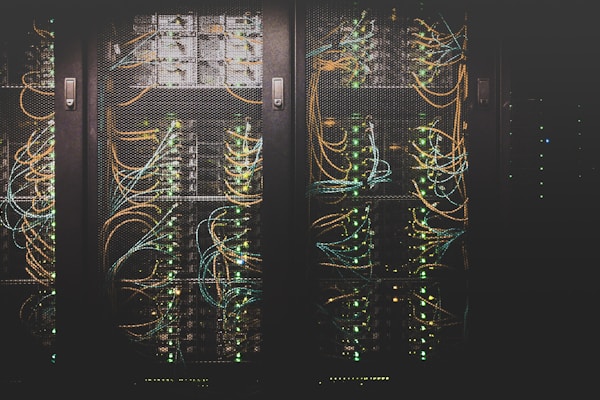
Compute Power Above 0.05 TH/s
Every unit we review must clear the 0.05 TH/s threshold. We log wall-power draw, joules per terahash, and sustained output under warehouse ambient temperatures between 18°C and 32°C.
We test ASIC and GPU rigs rated at 0.05 TH/s and above, then map how they fit cold-aisle and hot-aisle warehouse rows — before you bolt racks to concrete.
Every unit we review must clear the 0.05 TH/s threshold. We log wall-power draw, joules per terahash, and sustained output under warehouse ambient temperatures between 18°C and 32°C.
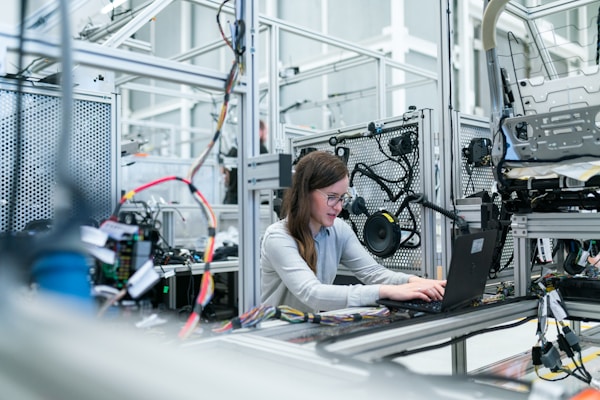
Rack depth, exhaust direction, and PDU placement change how air moves down a 1.2-metre aisle. We document clearance for forklift access and cable-tray routing on both sides of each row.

We calculate breaker headroom per 42U bay, note harmonic distortion on three-phase feeds, and flag when inline fans need repositioning to keep intake temps within manufacturer spec.
Before you order another pallet of S19-class units, our engineers walk your warehouse floor in Daegu or anywhere in South Korea. We produce an aisle-by-aisle plan showing rack count, exhaust orientation, PDU sizing, and forklift clearance.
The assessment covers buildings from 200 m² to 5,000 m² with existing or planned cold-aisle containment. You receive a marked floor plan, equipment shortlist matched to your power contract, and a phased install sequence.
See Assessment Details

Bitmain’s S19 XP clears our 0.05 TH/s threshold comfortably at 140 TH/s nominal. We ran two units in a standard 42U open-frame rack inside a 1,400 m² warehouse near Daegu with 28°C ambient intake.
At 195 mm depth, the S19 XP leaves 85 mm clearance to the rear door on a 800 mm deep rack — enough for a 60 mm hot-aisle gap when rows face each other across a 1.2 m aisle. Rear exhaust velocity was measured at 4.2 m/s, which pushed hot air into the containment channel without recirculating into the cold aisle when baffle panels were sealed at floor level.

The Avalon A1466 pushes 170 TH/s, making it one of the denser options we have tested in sub-metre aisles. Canaan’s side-intake design changes how rows must face in a warehouse block.
Unlike rear-exhaust Antminers, the A1466 pulls air from the left panel. In a cold-aisle/hot-aisle layout, all units in a row must face the same direction so intakes align with the cold aisle. Reversing one unit in a bay creates a local hot spot that raised chip temps 11°C in our test.
For operators who already have hardware hashing but suspect breaker trips or uneven phase loading, this audit maps every PDU circuit against actual wall draw.
Mixed batches of S19 and M50 units on the same PDU often create 15–20% phase imbalance. We specify which units to move to which bay to flatten the load without downtime exceeding four hours per row.
We had twelve Antminer rows squeezed into a 900 m² unit near Gumi. File Lagooncore redrew the hot-aisle map and we gained space for four more bays without touching the main breaker. Install crew followed their sequence and we were hashing within nine days.
— Min-jun H., 1.8 MW facility operator
Their review of our Whatsminer M50 batch was blunt about intake restriction when racks sit back-to-back. We re-spaced two rows and dropped average chip temp by six degrees. Report arrived on paper and PDF, which our electrician preferred over a slide deck.
— Soo-yeon K., co-location host in Daegu
Tell us your floor dimensions and power contract. We respond within two business days with availability for an on-site walkthrough.
Send Floor Dimensions